Great Family Artists ERP Yellow Duck Coders

Custom ERP for Music & Live Event Operations

Great Family Artists ERP

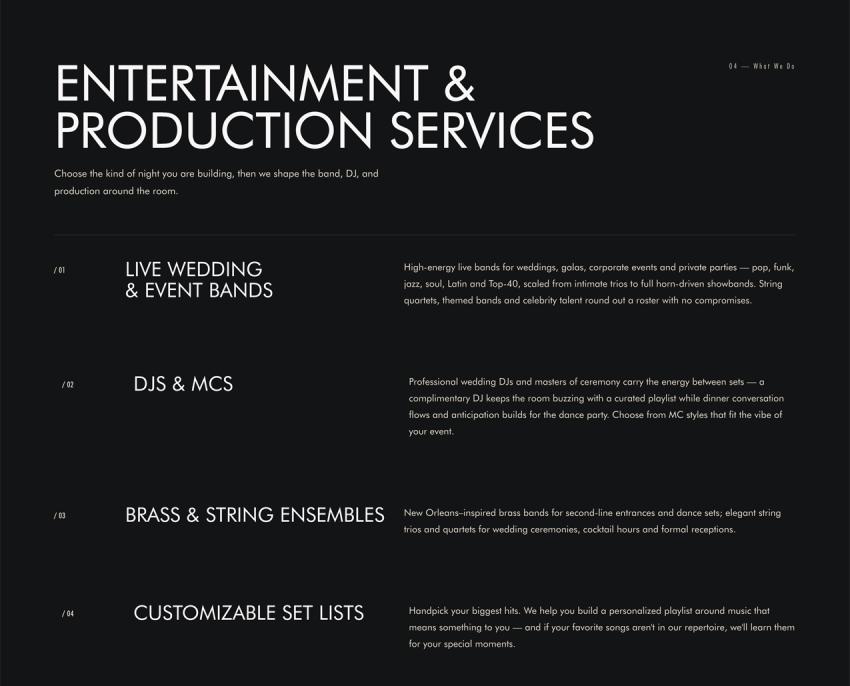
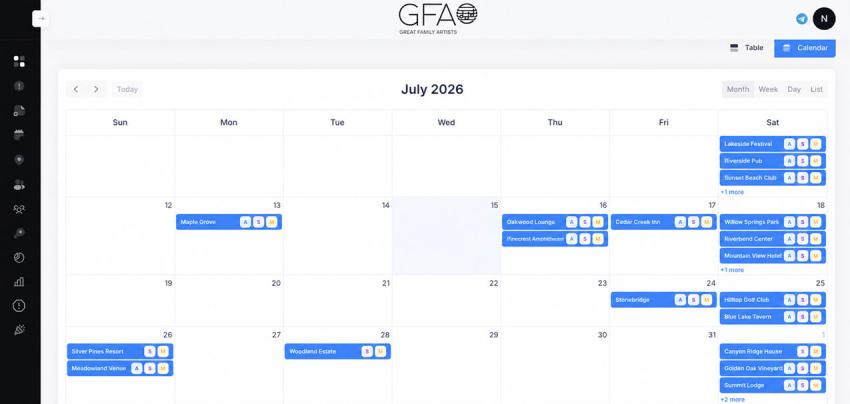
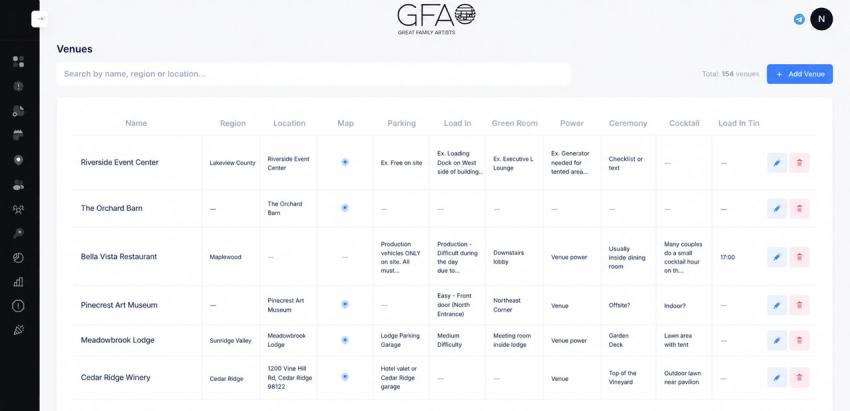
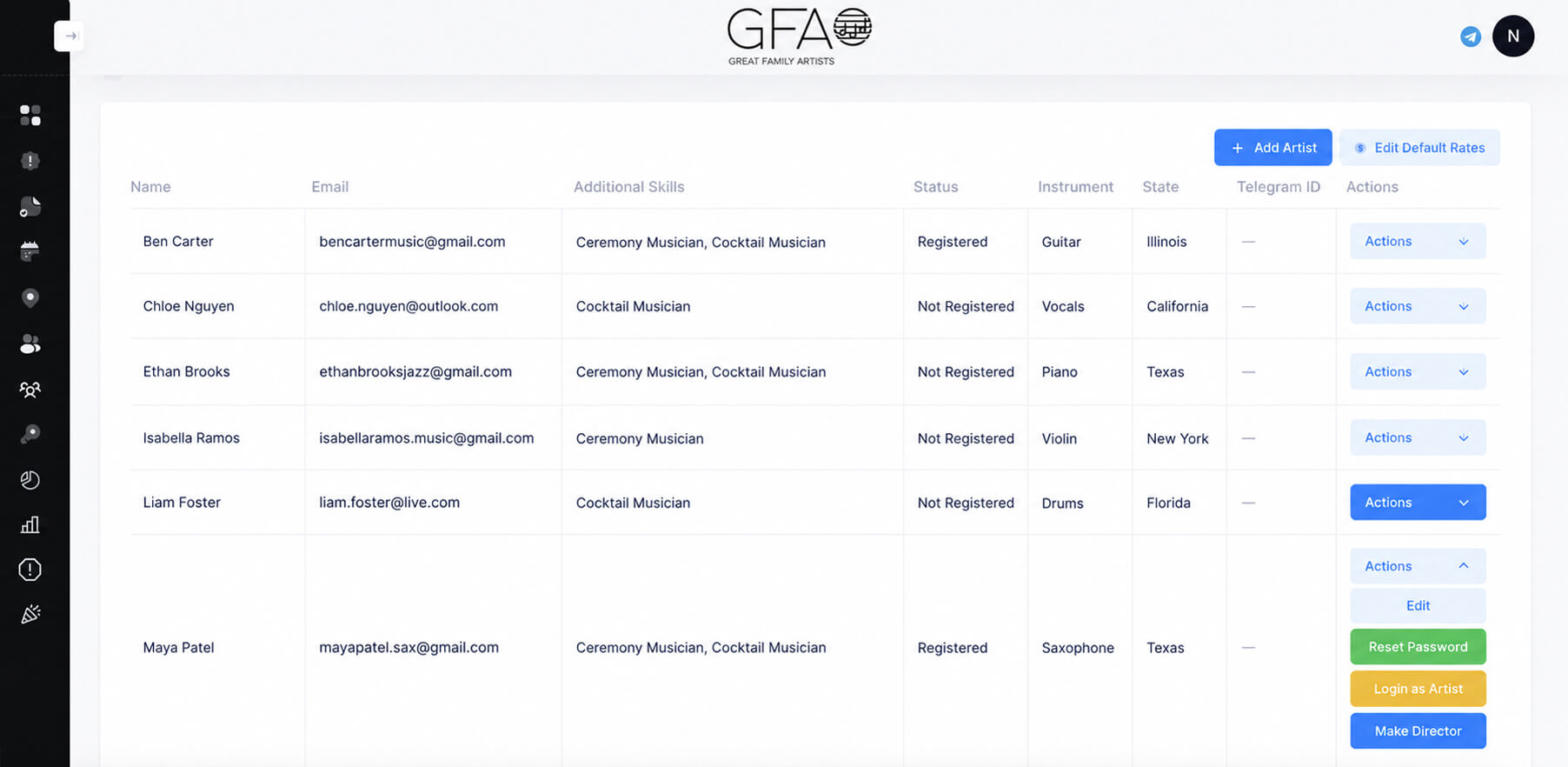
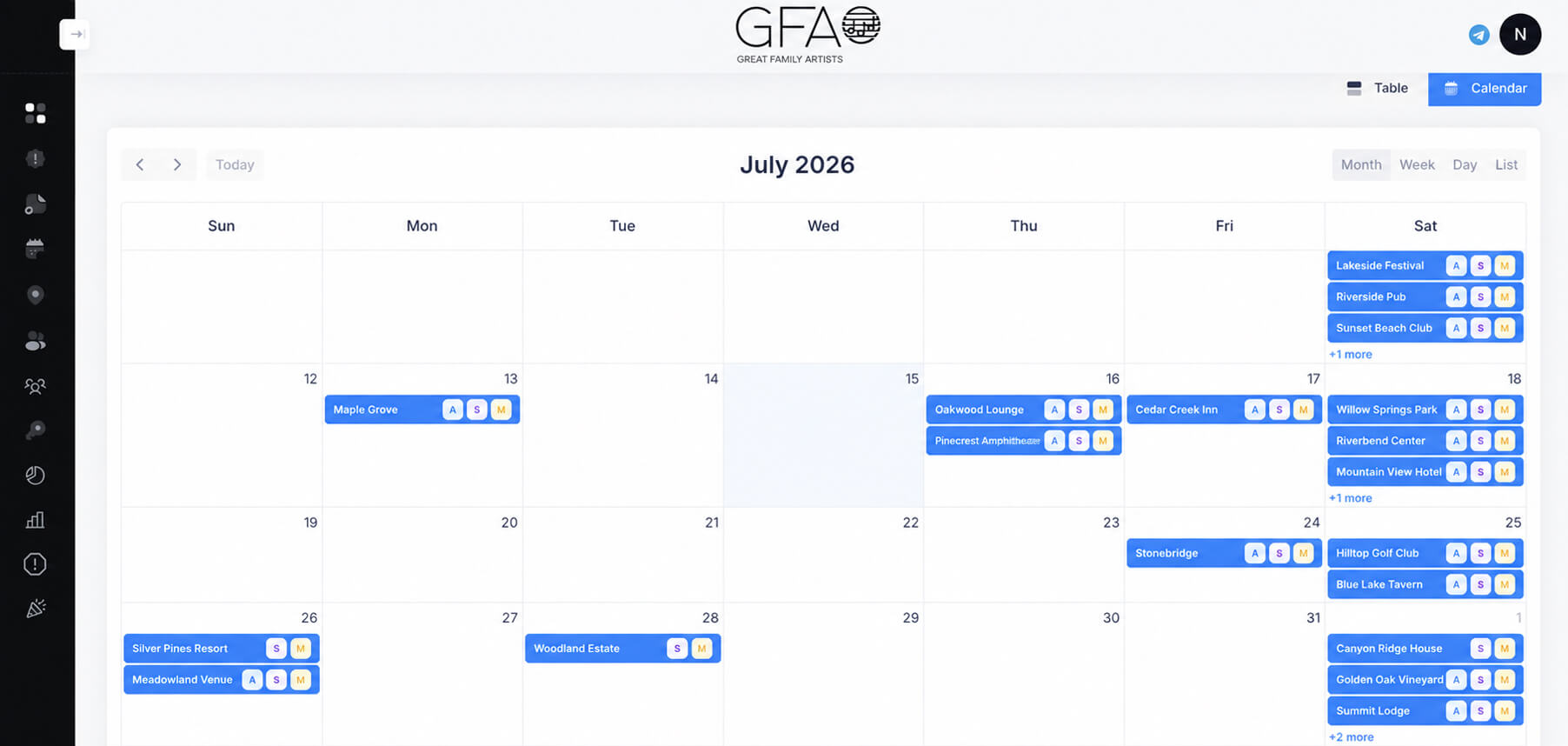
Great Family Artists ERP is a custom business management platform that centralizes the complex operations behind live music and event services. It brings events, clients, musicians, venues, contracts, hiring, calendars, setlists, documents, communication, and operational workflows into one connected ecosystem – giving the company complete visibility from the first client agreement to the final performance.

Industry

Music & Live Entertainment, Event Services, Entertainment Operations

Technologies

Laravel, PHP, MySQL, AWS, Laravel Livewire, Google Apps Script, Google OAuth, Trello, AI Agents

Services

DevOps, Product Discovery, Solution Architecture, Frontend Development, Backend Development, QA Testing, Business Analysis, UX/UI Design, Process Automation, ERP Development, Google Workspace Integrations, Third-Party Integrations, AI Integration, AWS Infrastructure, Continuous Product Development

Project Mission

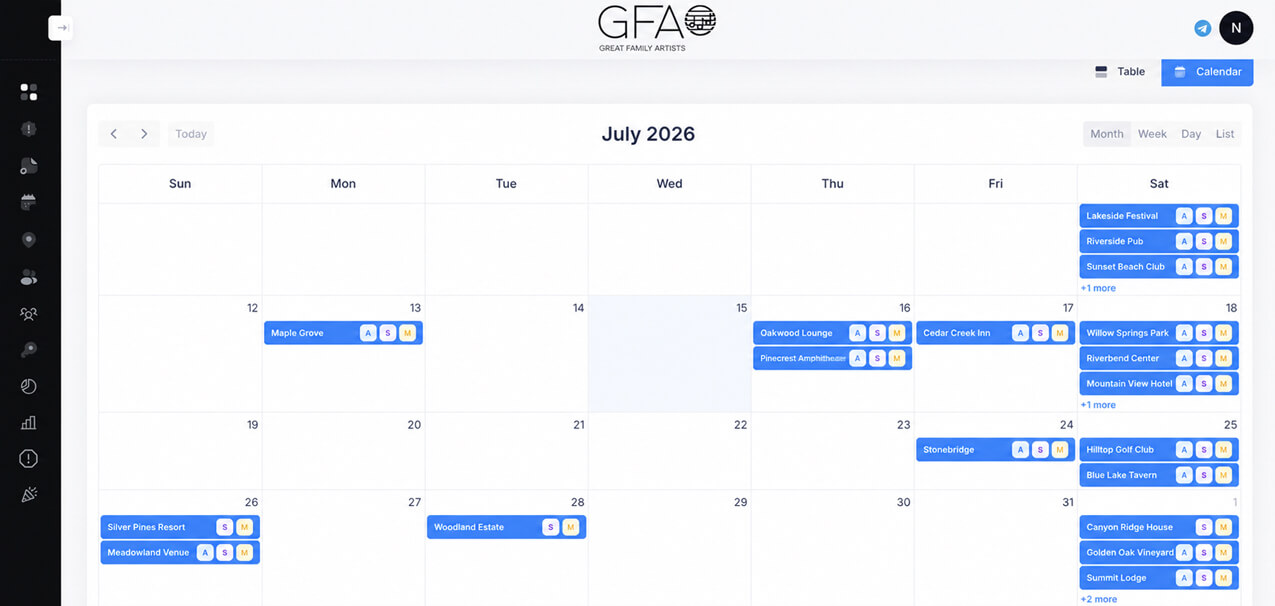
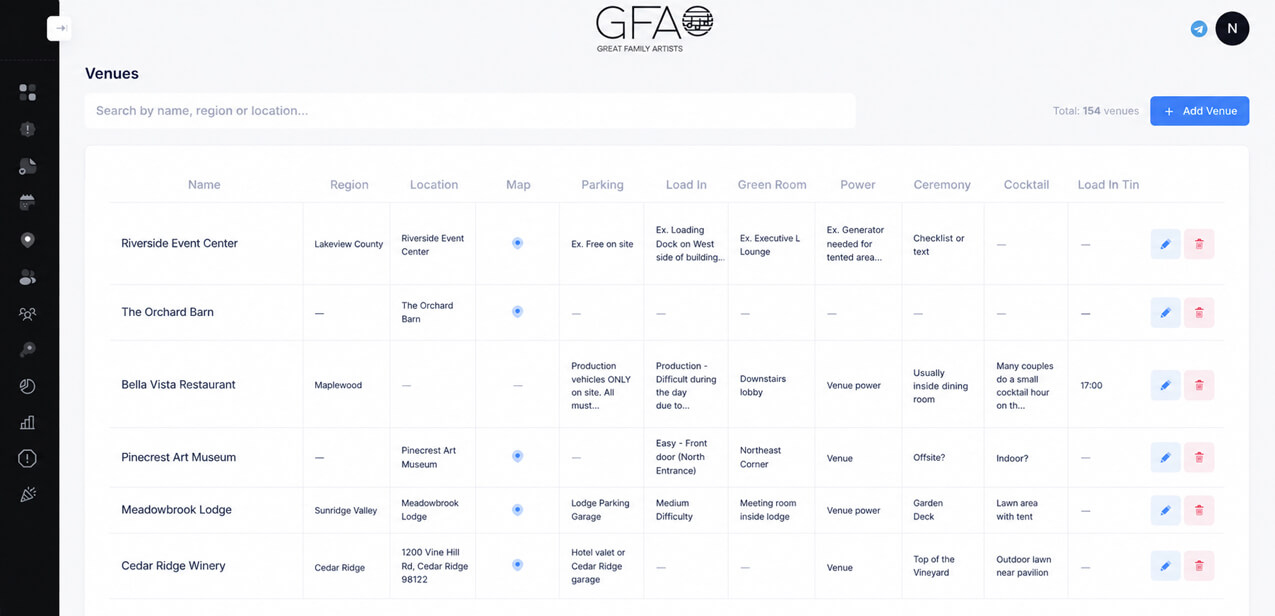
The mission was to transform fragmented, manual operations into a transparent digital workflow. Information previously scattered across Trello, Google Sheets, calendars, emails, documents, and team members was consolidated into a single system where participants could access the right data and management could track every event.
The goal was to automate event coordination, reduce human error, prevent information loss, and build a scalable operational foundation for future growth.

Gallery Image
Gallery Image
Gallery Image
Gallery Image
Gallery Image
Gallery Image
Gallery Image
Gallery Image
Gallery Image
Gallery Image

CLIENT'S IDEA

The client envisioned a centralized ERP platform for managing musicians and music services for events. Every event involves a large number of interconnected decisions – contracts, locations, musicians, schedules, client preferences, music programs, documents, communication, and last-minute changes.
The idea was to bring these processes together so that managers, music directors, musicians, and clients could work with consistent information while the system automatically handled much of the coordination happening behind the scenes.
DEVELOPMENT PROCESS

step 1

Workflow Automation

Analyzed and automated Trello workflows, including contracts, event creation, calendar operations, and Google Workspace integration.

step 2

Integration Architecture

Integrated Trello, Google Sheets, Docs, Calendar, Gmail, OneFlow, Twilio, and other services into reliable automated workflows.

step 3

ERP Architecture

Built a dedicated ERP, replacing scattered scripts and third-party tools with a structured, maintainable system.

step 4

Operations Migration

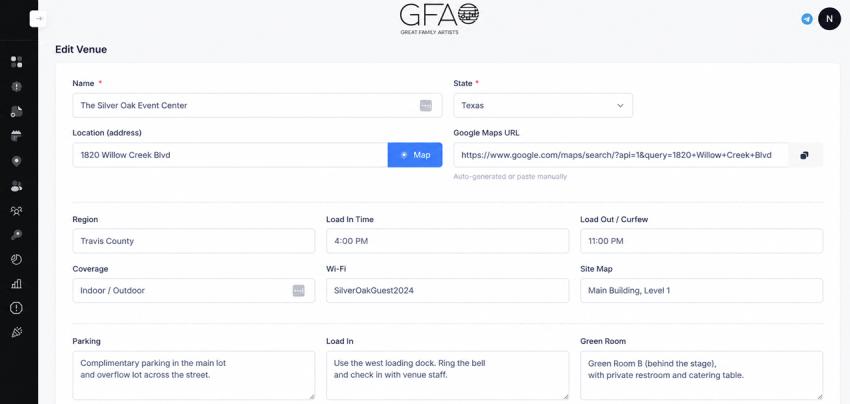
Centralized event management, musician coordination, venue, client, and music planning into dedicated ERP modules.

step 5

Advanced Automation

Automated documents, contracts, invitations, calendar sync, notifications, validation, and cross-system updates.

step 6

Continuous Evolution

Expanded the platform with dozens of workflows and operational tools that were difficult or impossible to implement reliably within the original Trello-based architecture.

CHALLENGES

  • Business data was spread across Trello, Google tools, and external services. The challenge was unifying them into one ERP without disruption.
  • Assigning a musician triggered updates across spreadsheets, Trello, email, SMS, Calendar, and workspaces, requiring seamless synchronization.
  • As musical programs evolved, data had to stay synchronized across client forms, the ERP, setlists, calendars, and musician materials.
  • Event operations depended on dozens of conditional rules: state, event type, musician availability, contract information, services, pricing, musical roles, and client preferences could all change the next step. The system had to convert this operational knowledge into workflows that could execute consistently without relying on someone remembering every detail.
Challenge 1
Challenge 2
Challenge 3
Challenge 4
Challenge 5
Challenge 6
Challenge 7
Challenge 8
Challenge 9
Challenge 10
Challenge 11
Challenge 12

UNIQUE FEATURES

End-to-End Event Operations

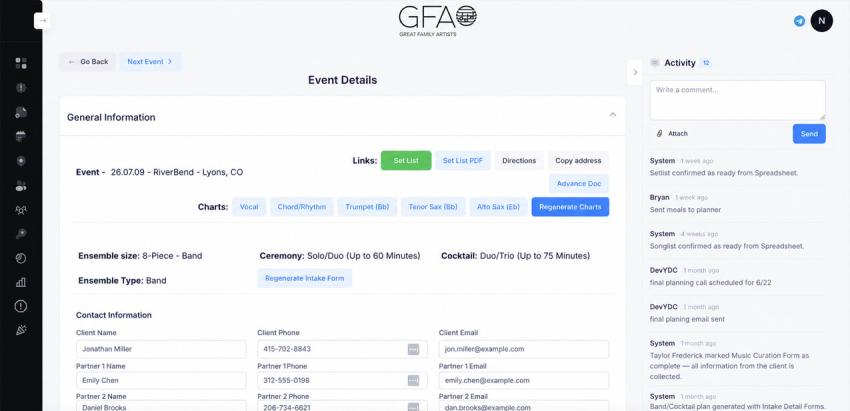
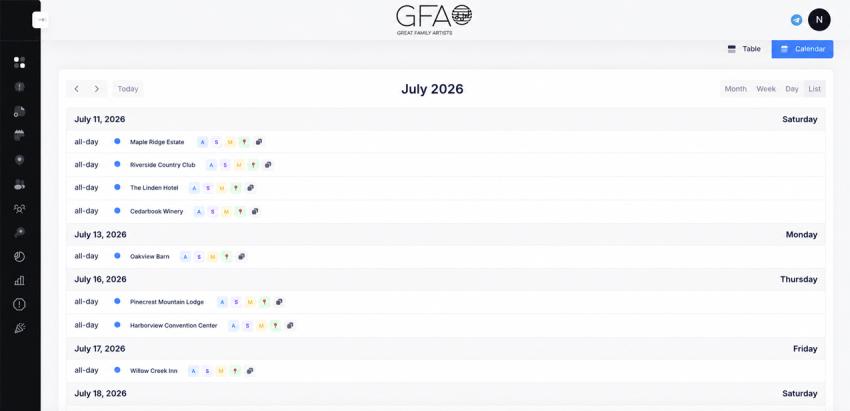
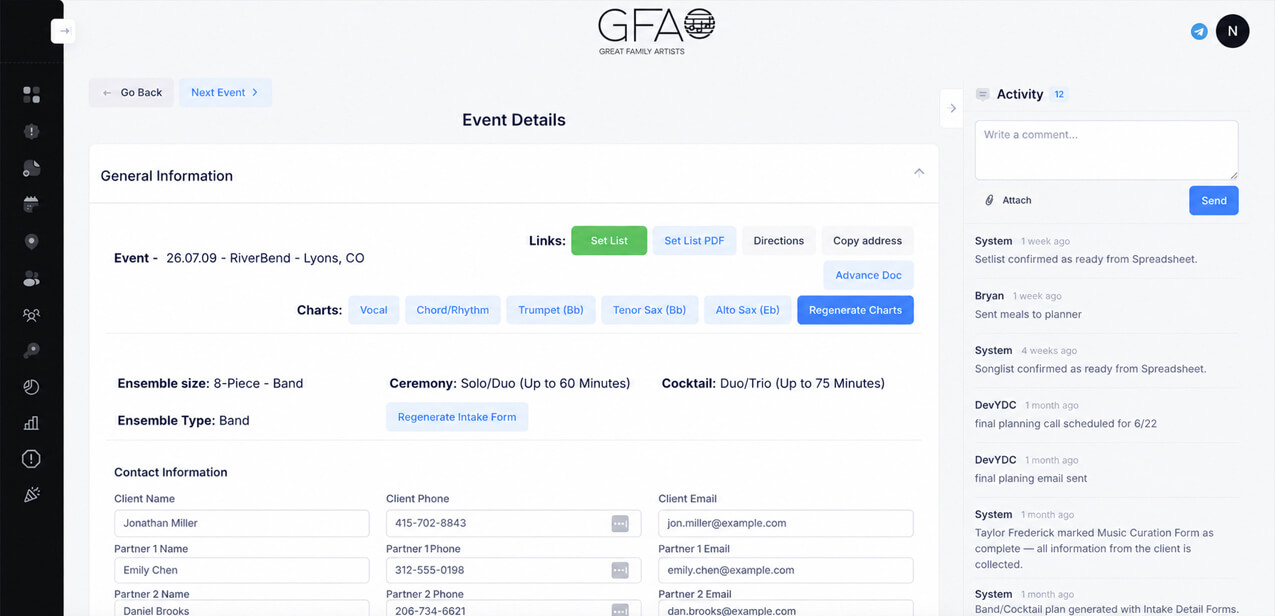
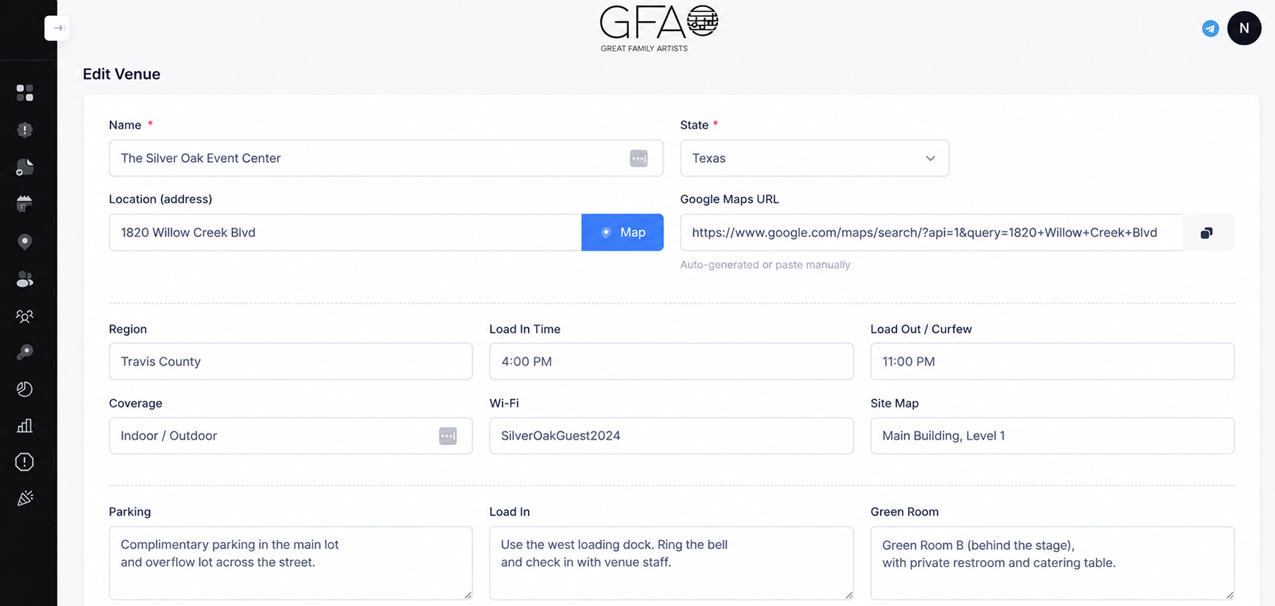
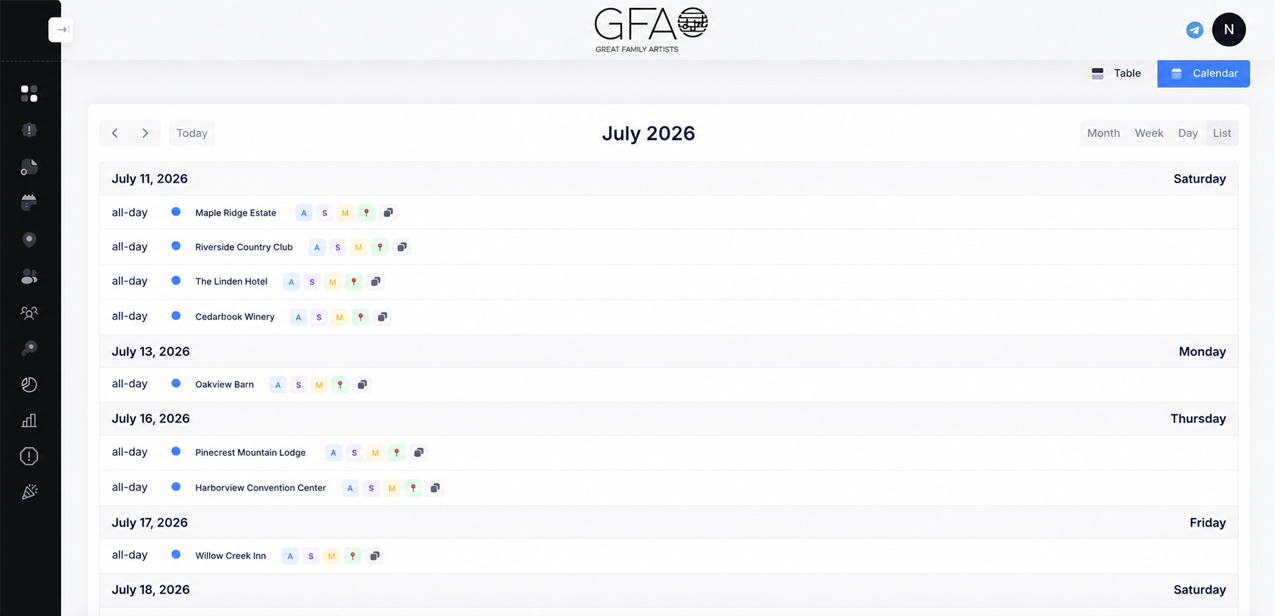
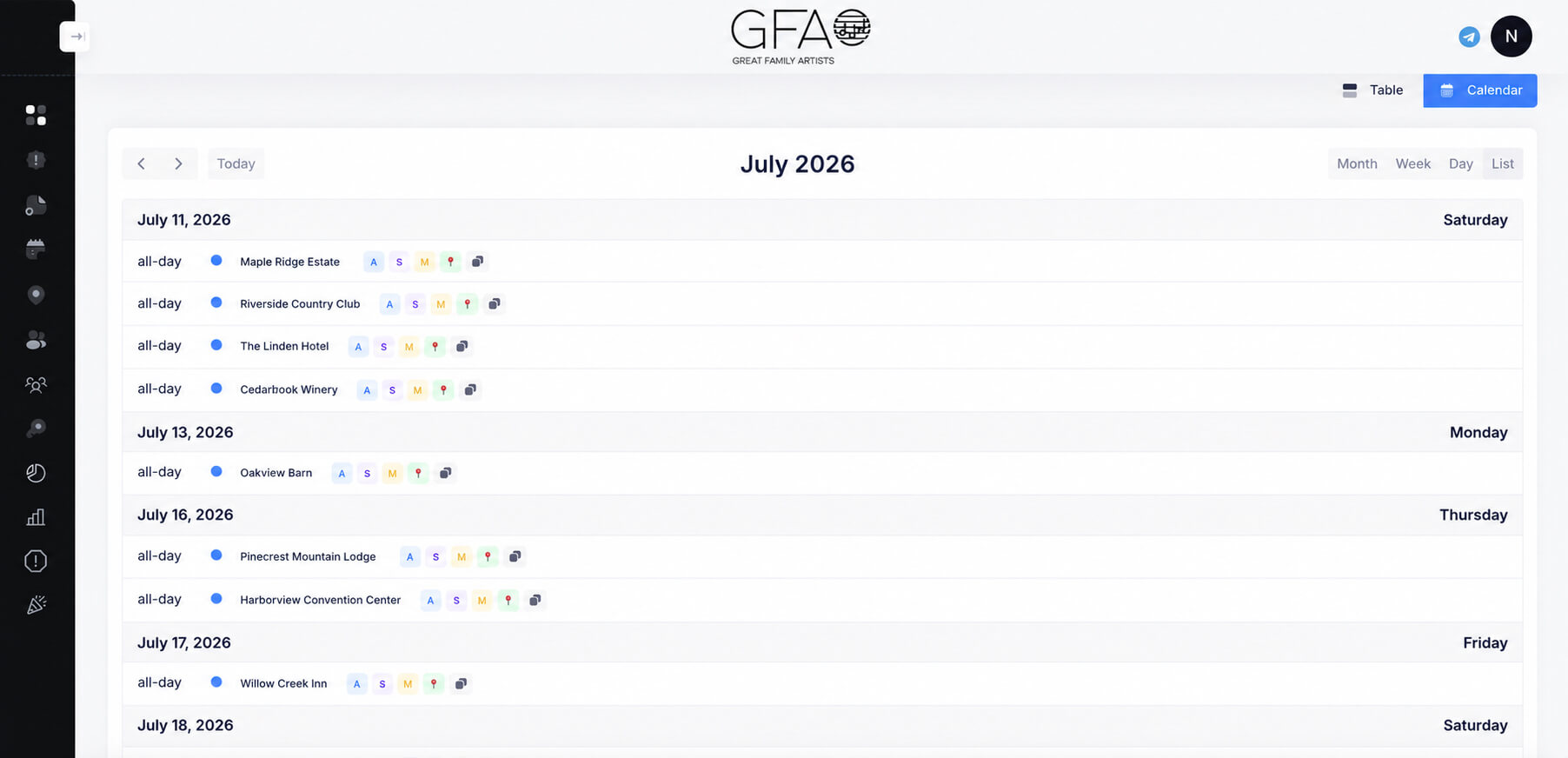
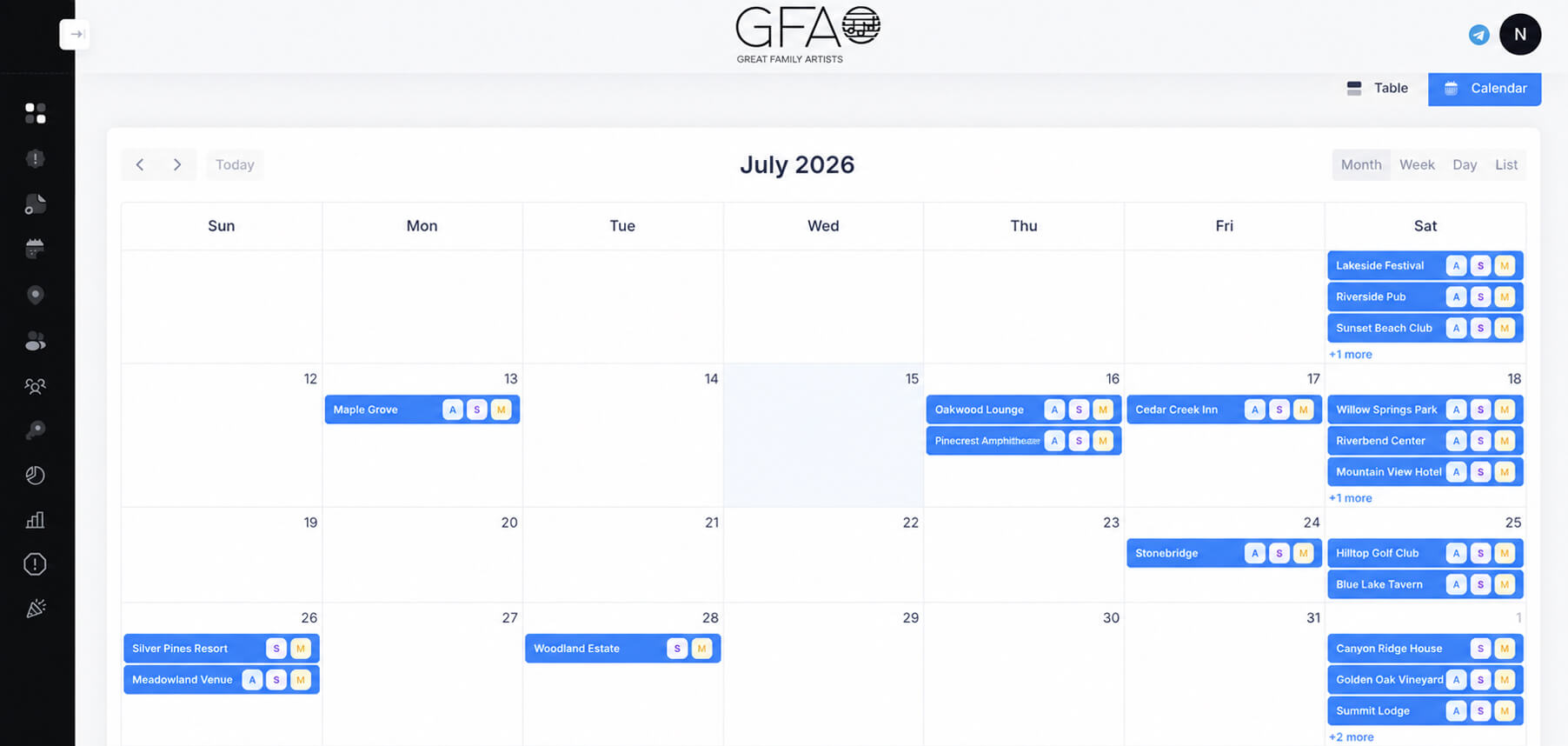
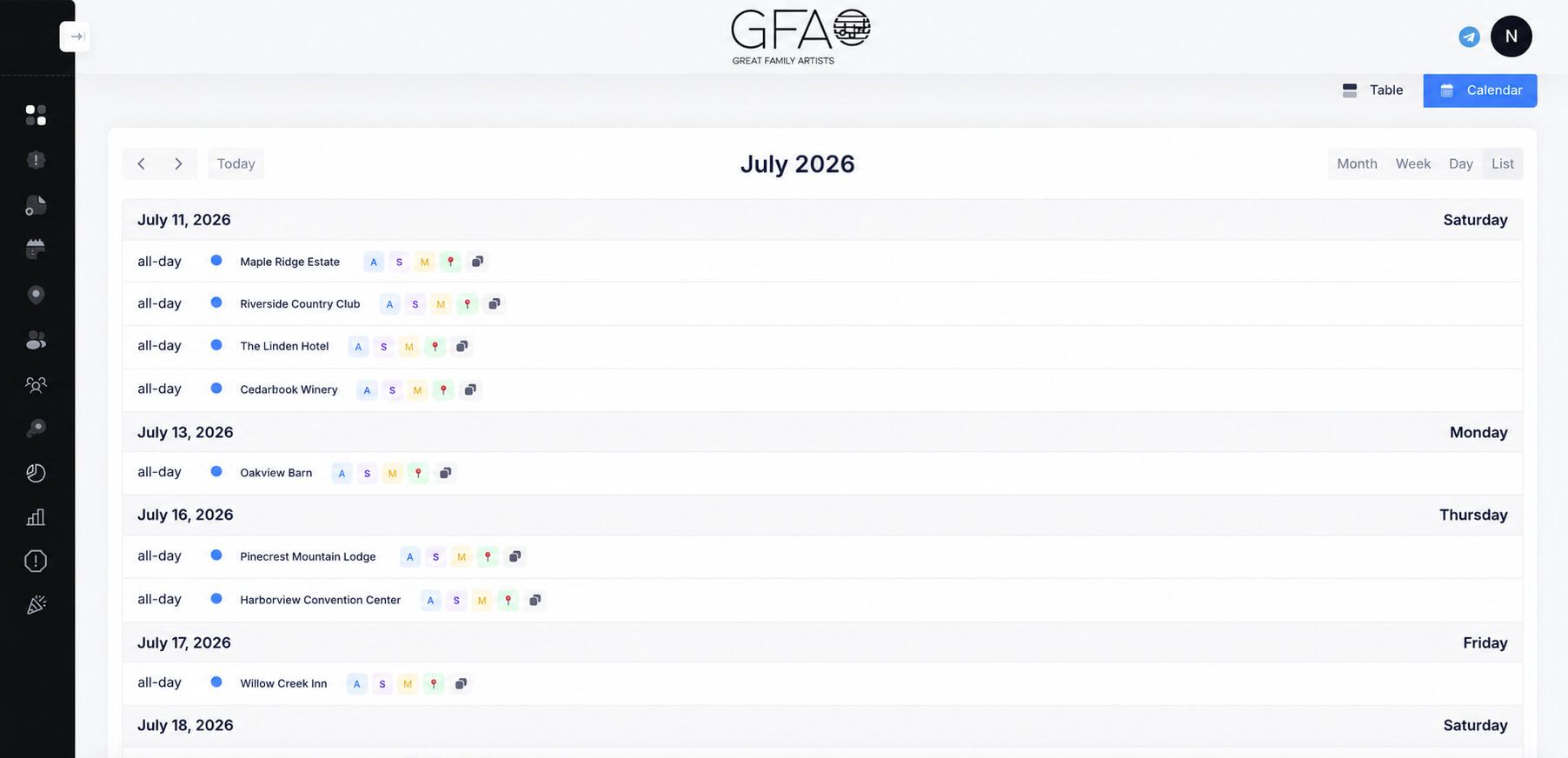
Each event becomes a centralized operational workspace connecting client information, contracts, musicians, venues, schedules, music requirements, documents, and event progress. Instead of reconstructing the full picture across multiple tools, teams can manage the event lifecycle from one system.

Automated Musician Hiring & Coordination

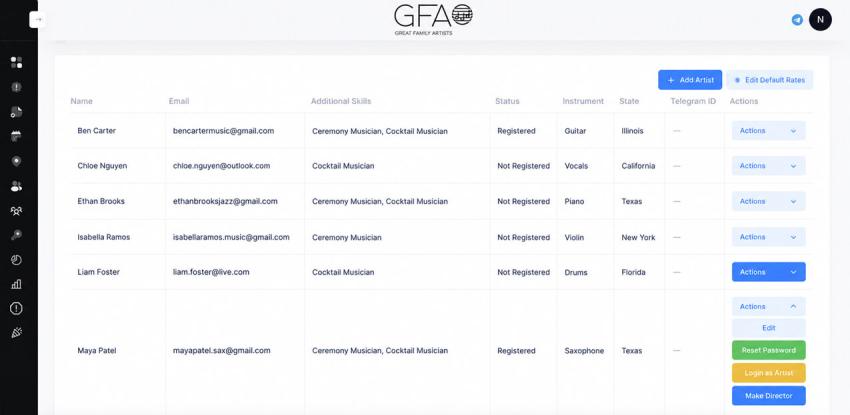
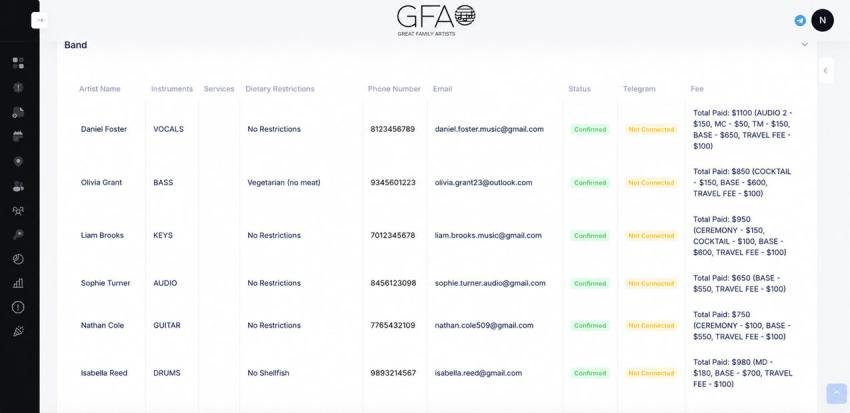
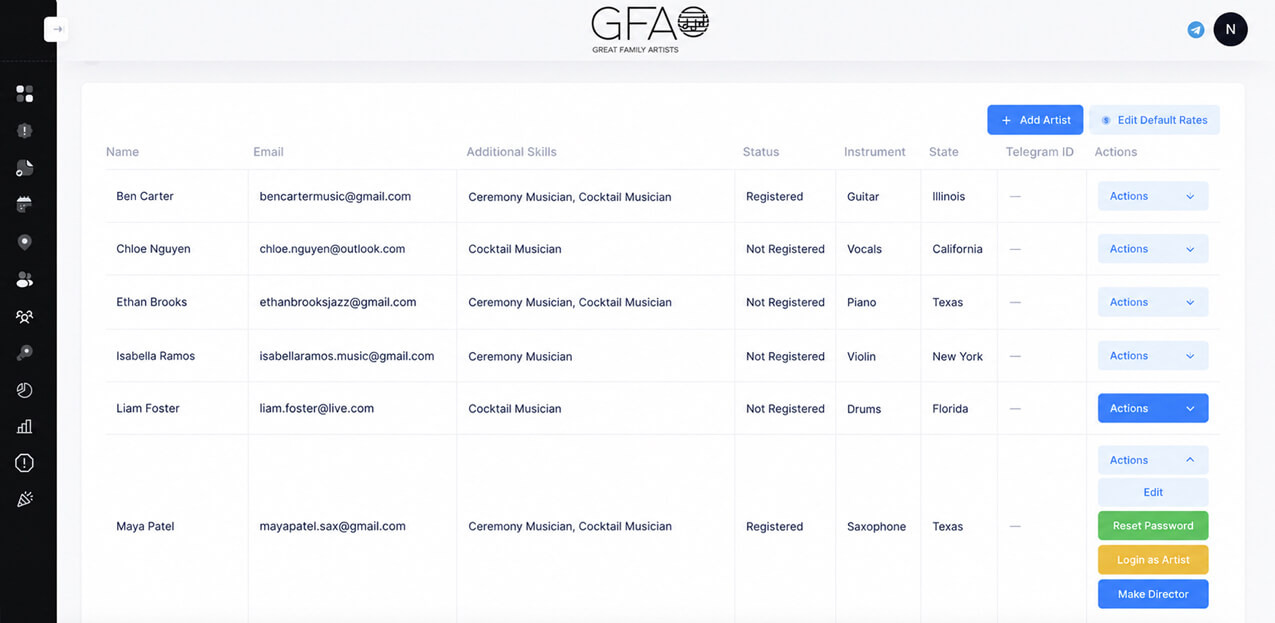
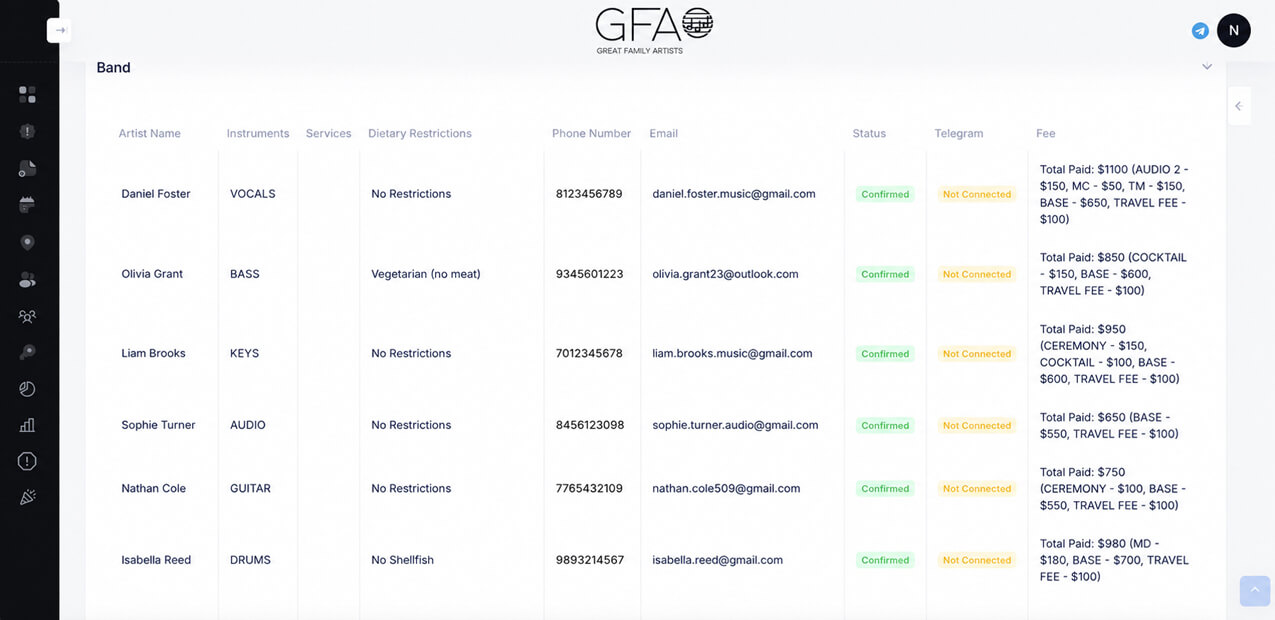
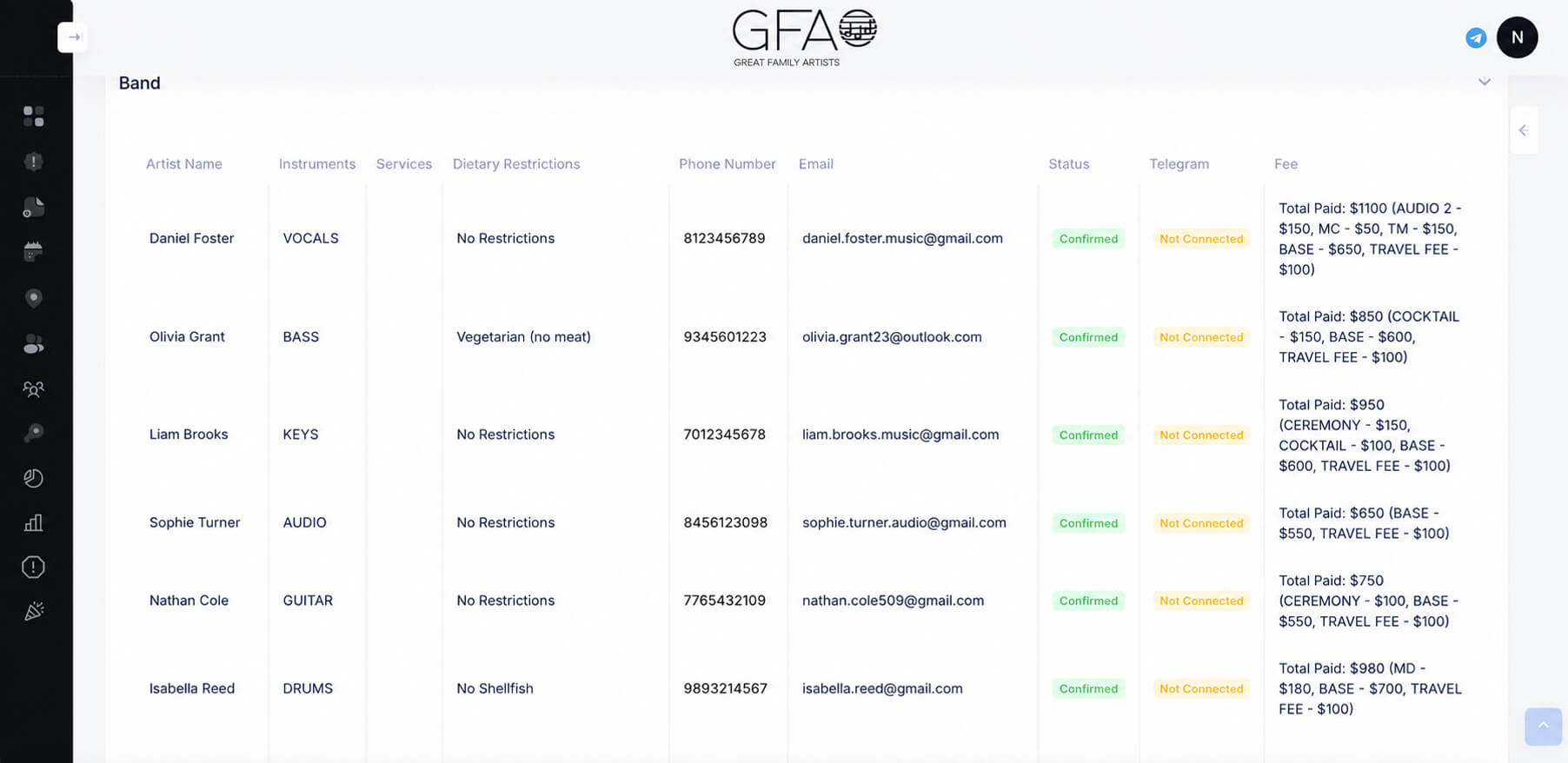
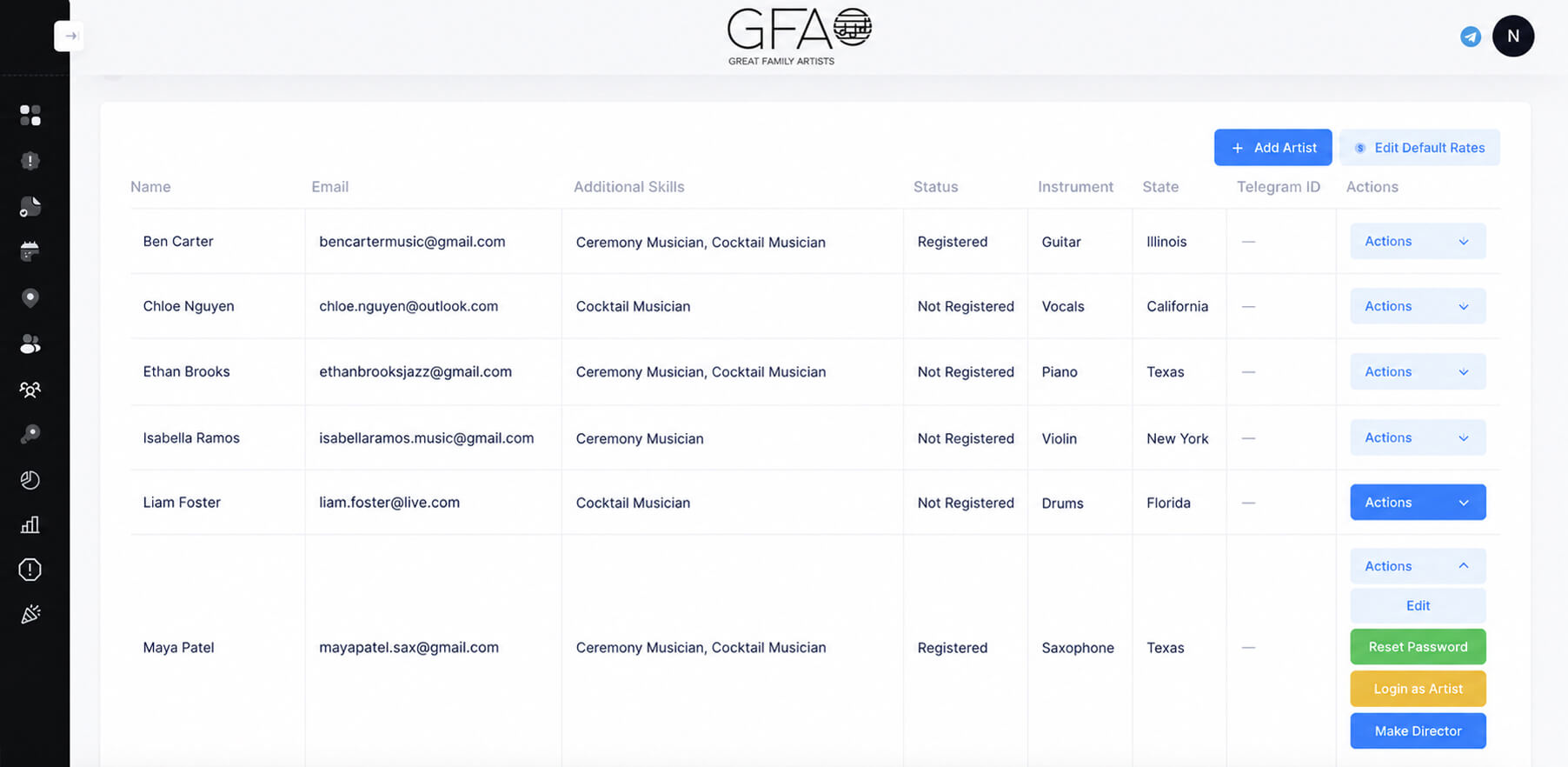
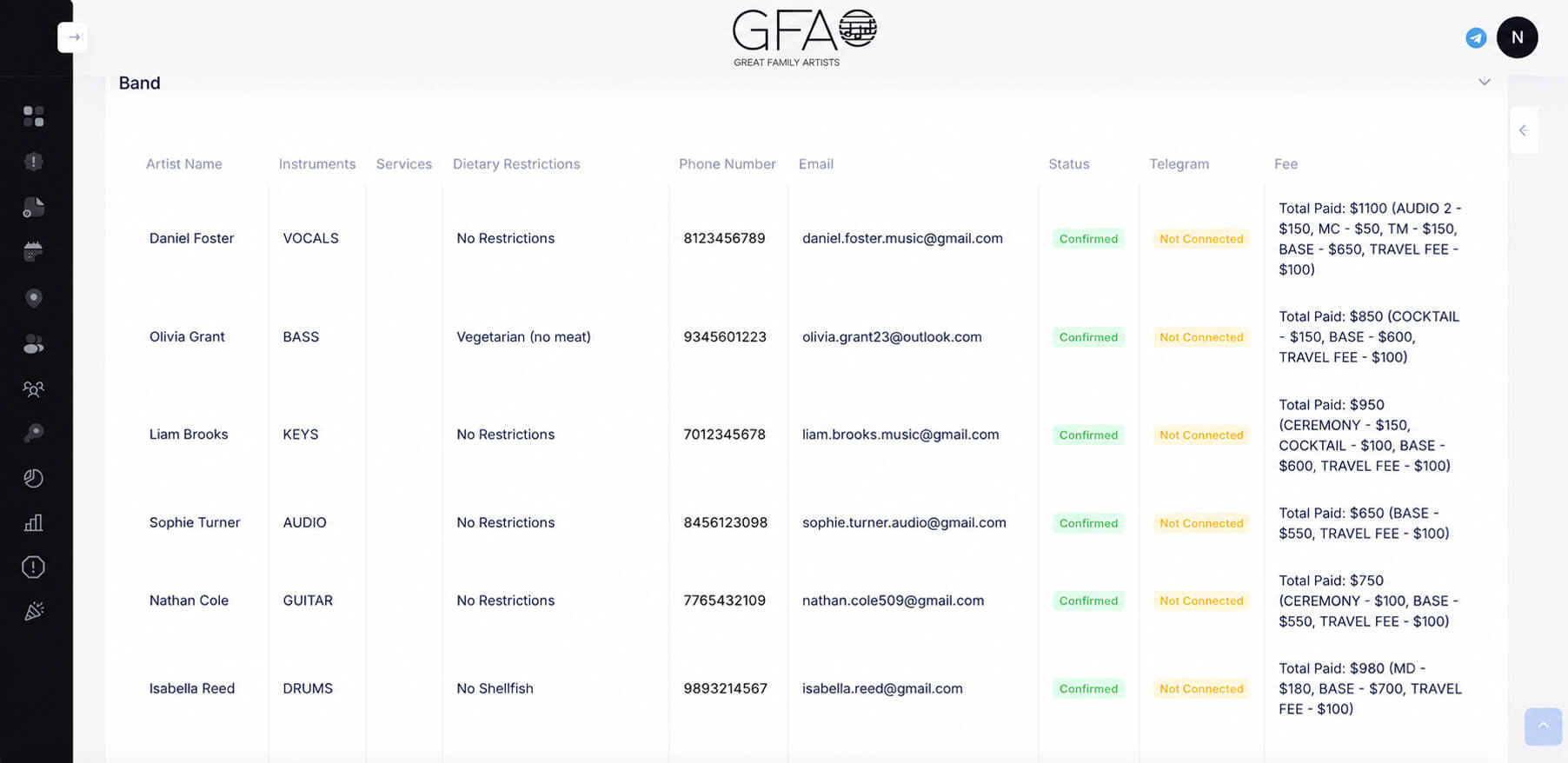
When a musician is assigned, the ERP supports the entire coordination chain – validating performer information, connecting the musician to the event, applying service and pricing data, sending email and SMS invitations, processing acceptance or rejection, synchronizing calendar participation, and preserving status history. Music Directors can also remove or replace performers while related data is updated across the workflow.

Intelligent Music & Setlist Management

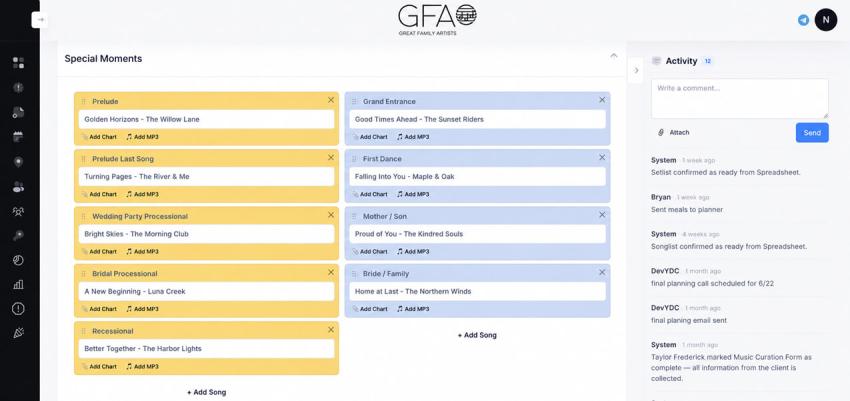
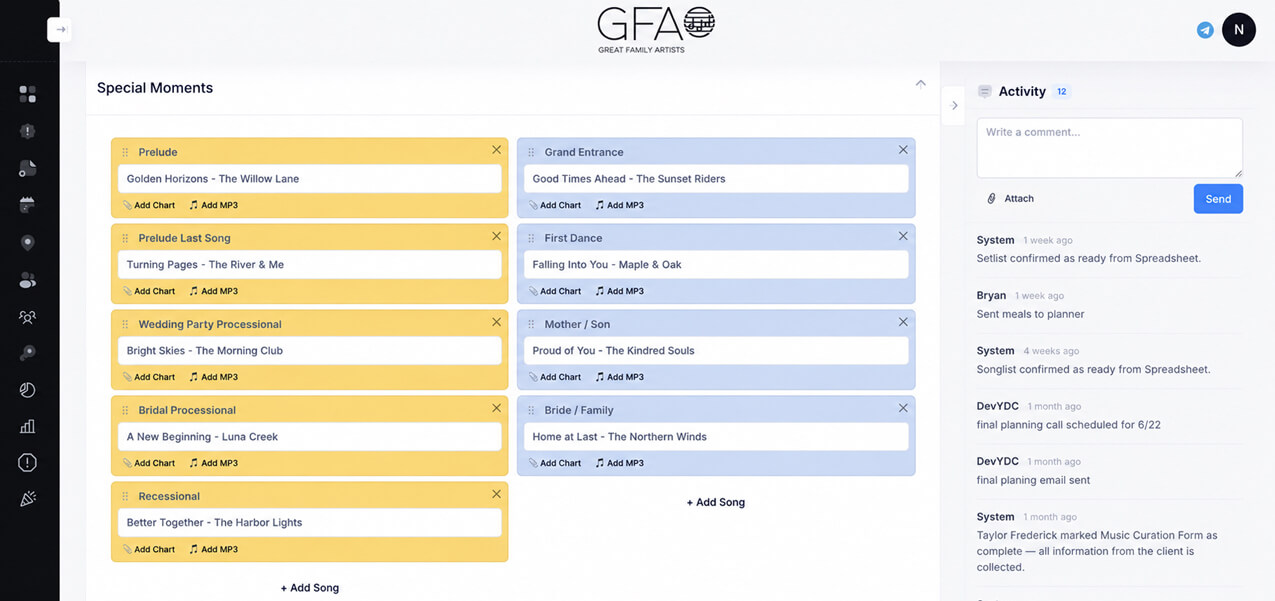
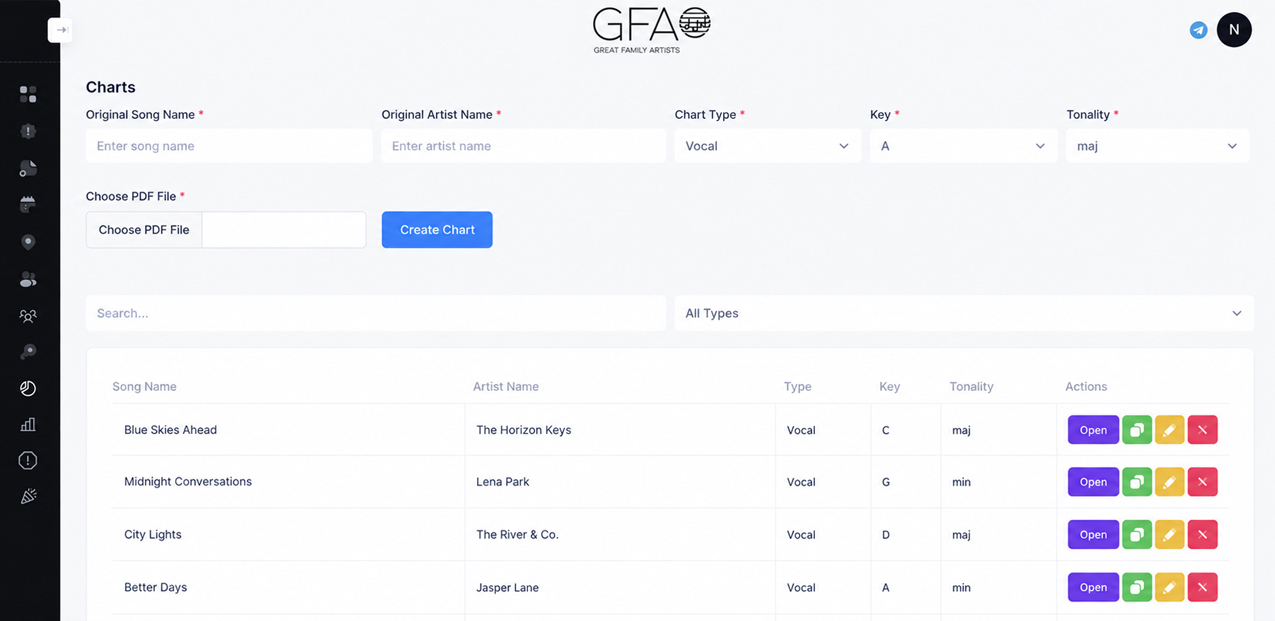
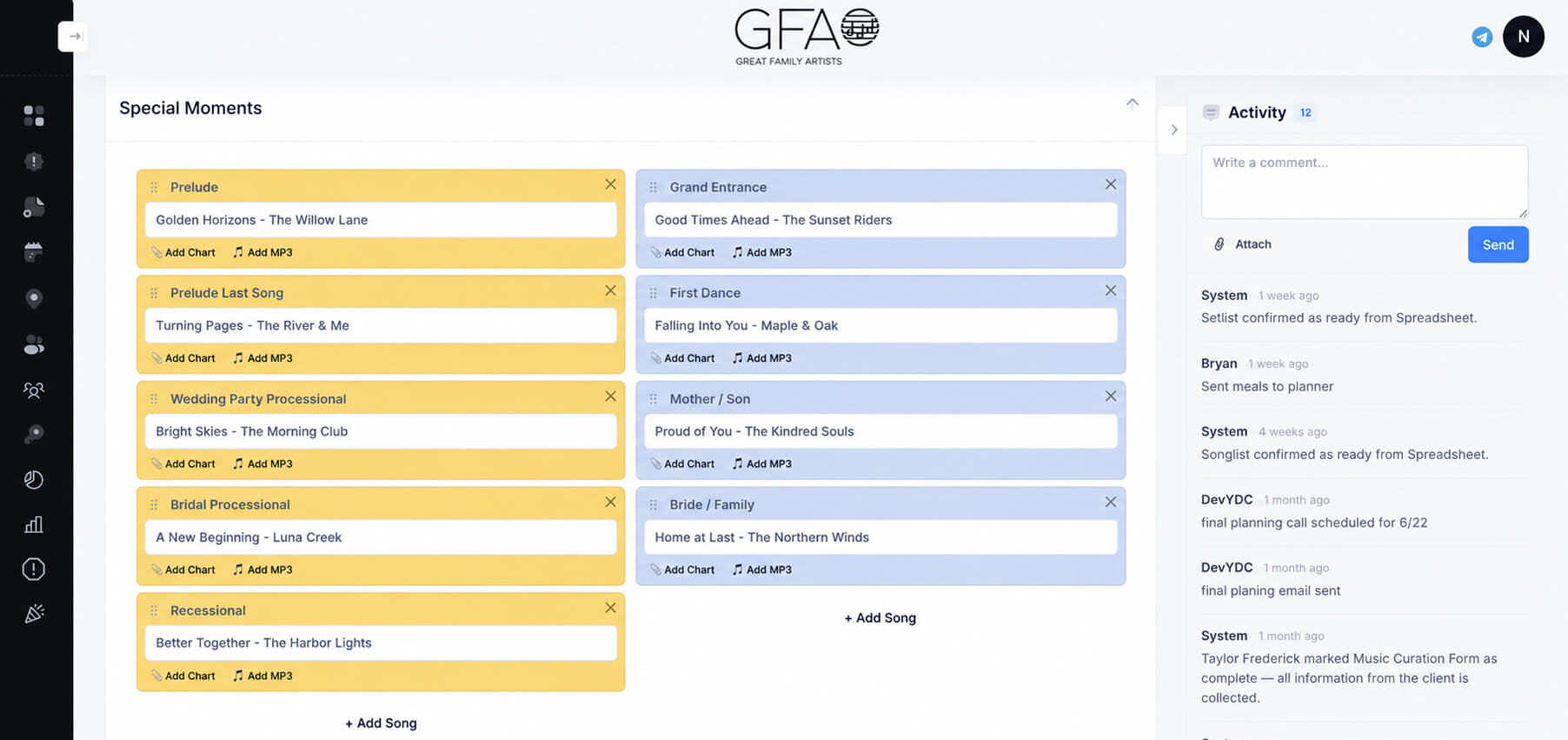
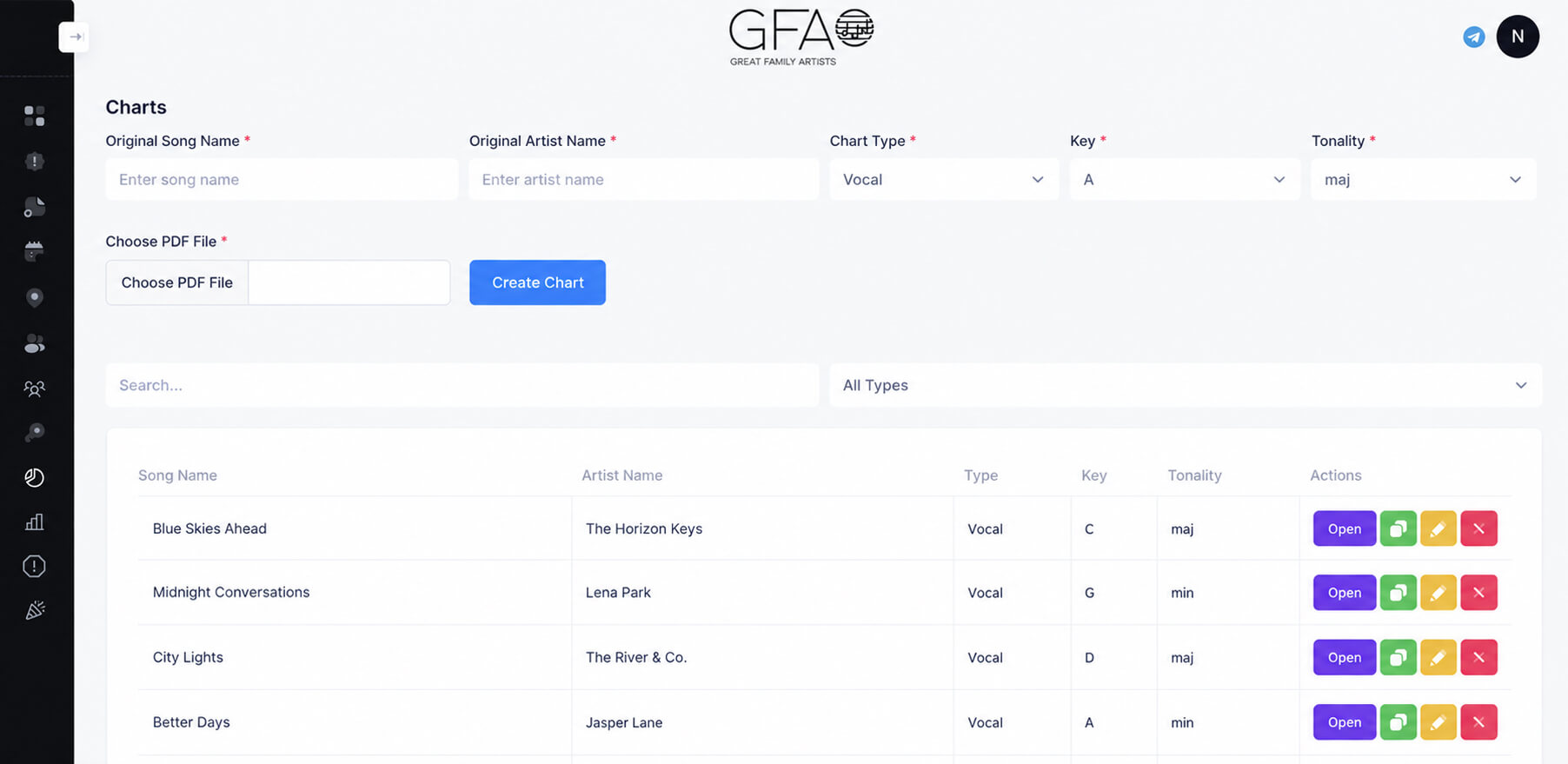
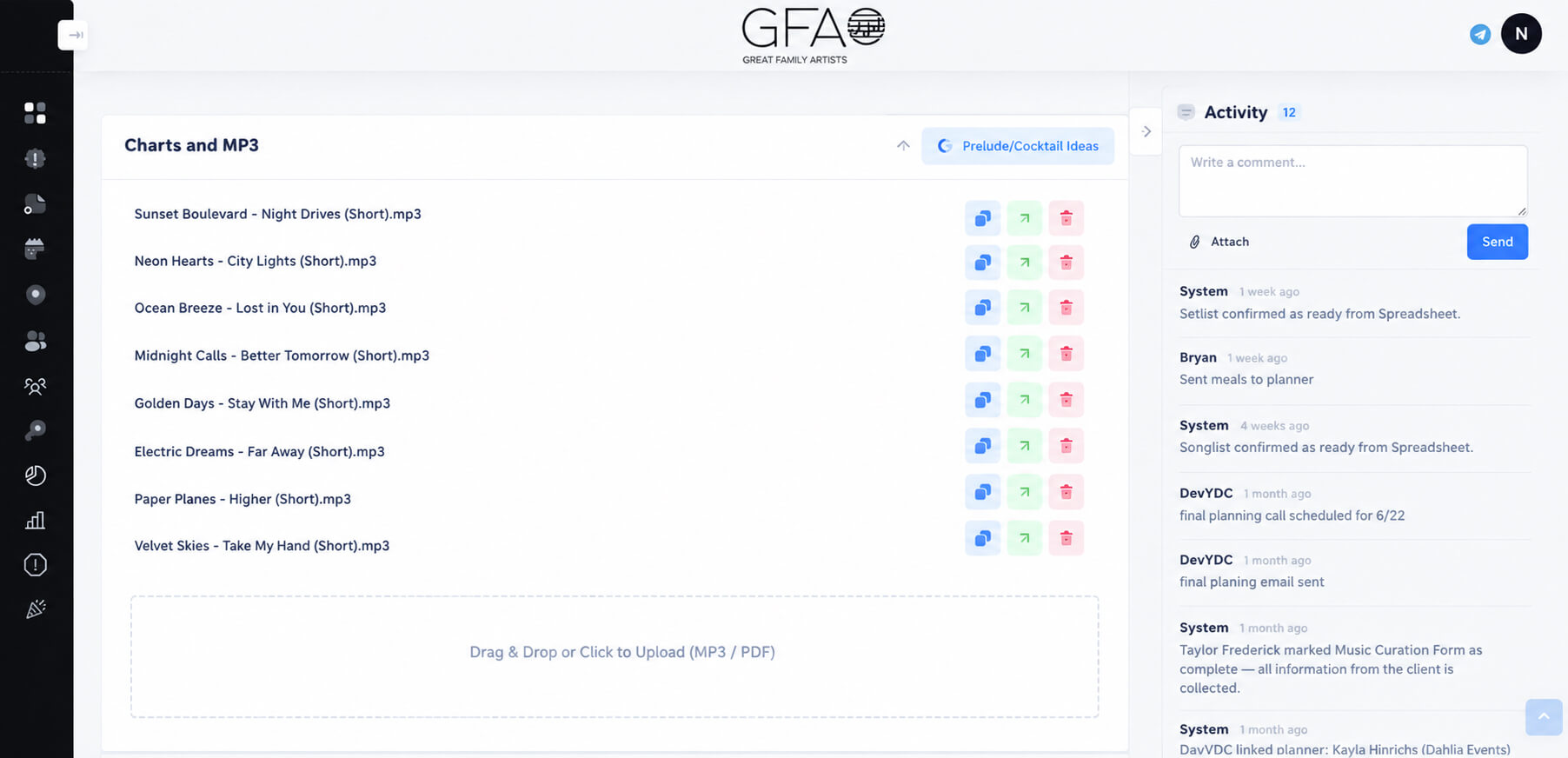
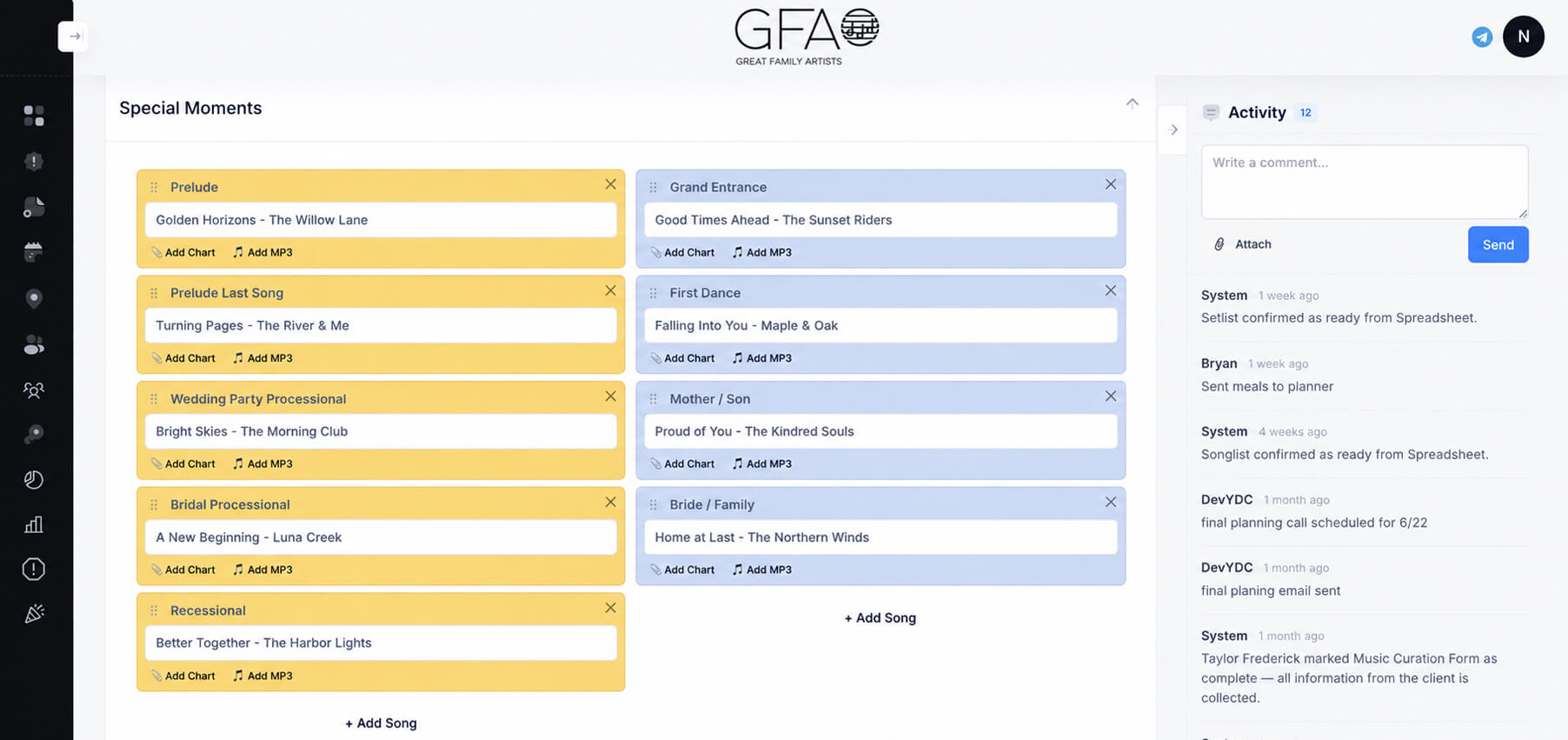
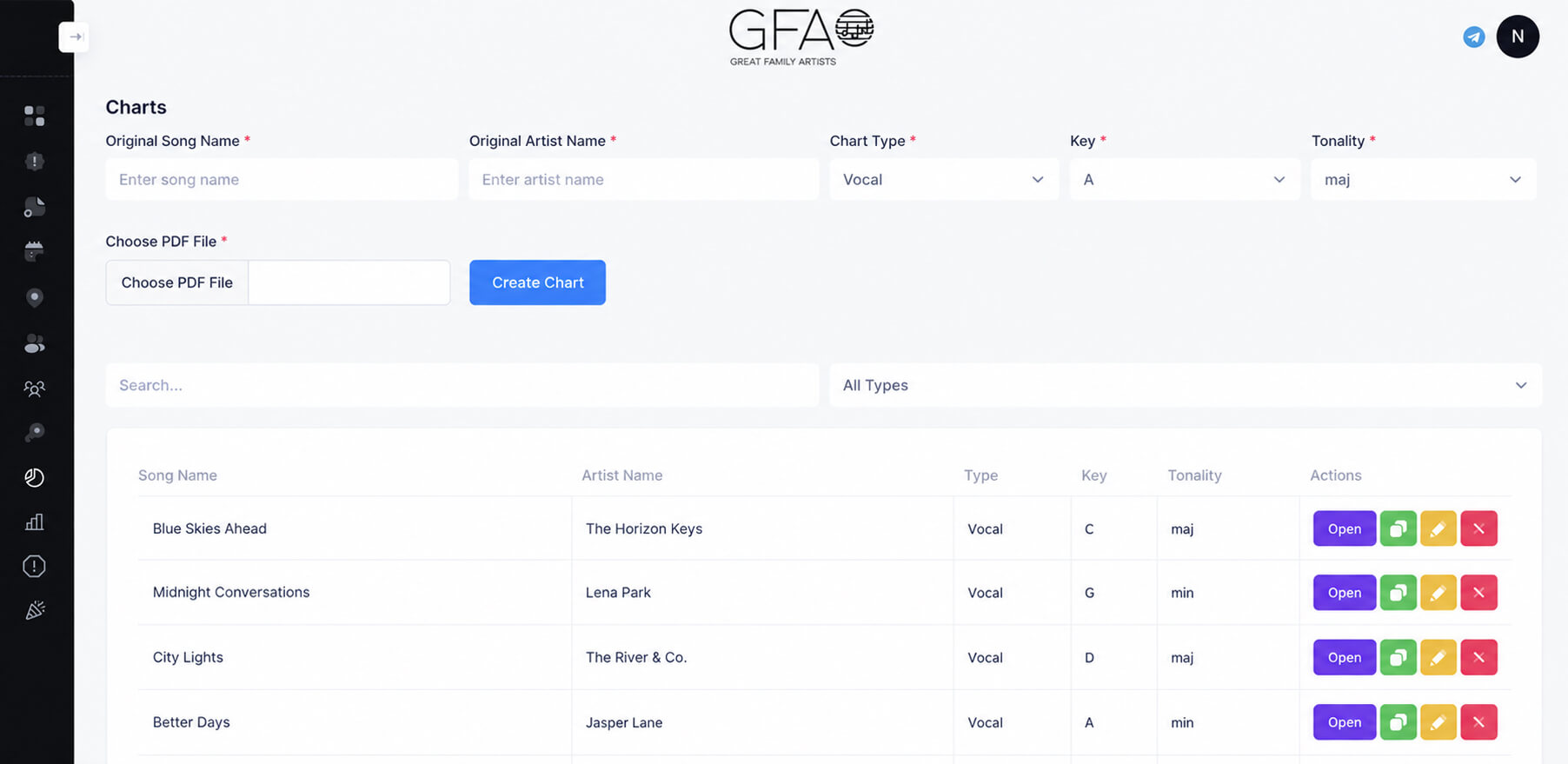
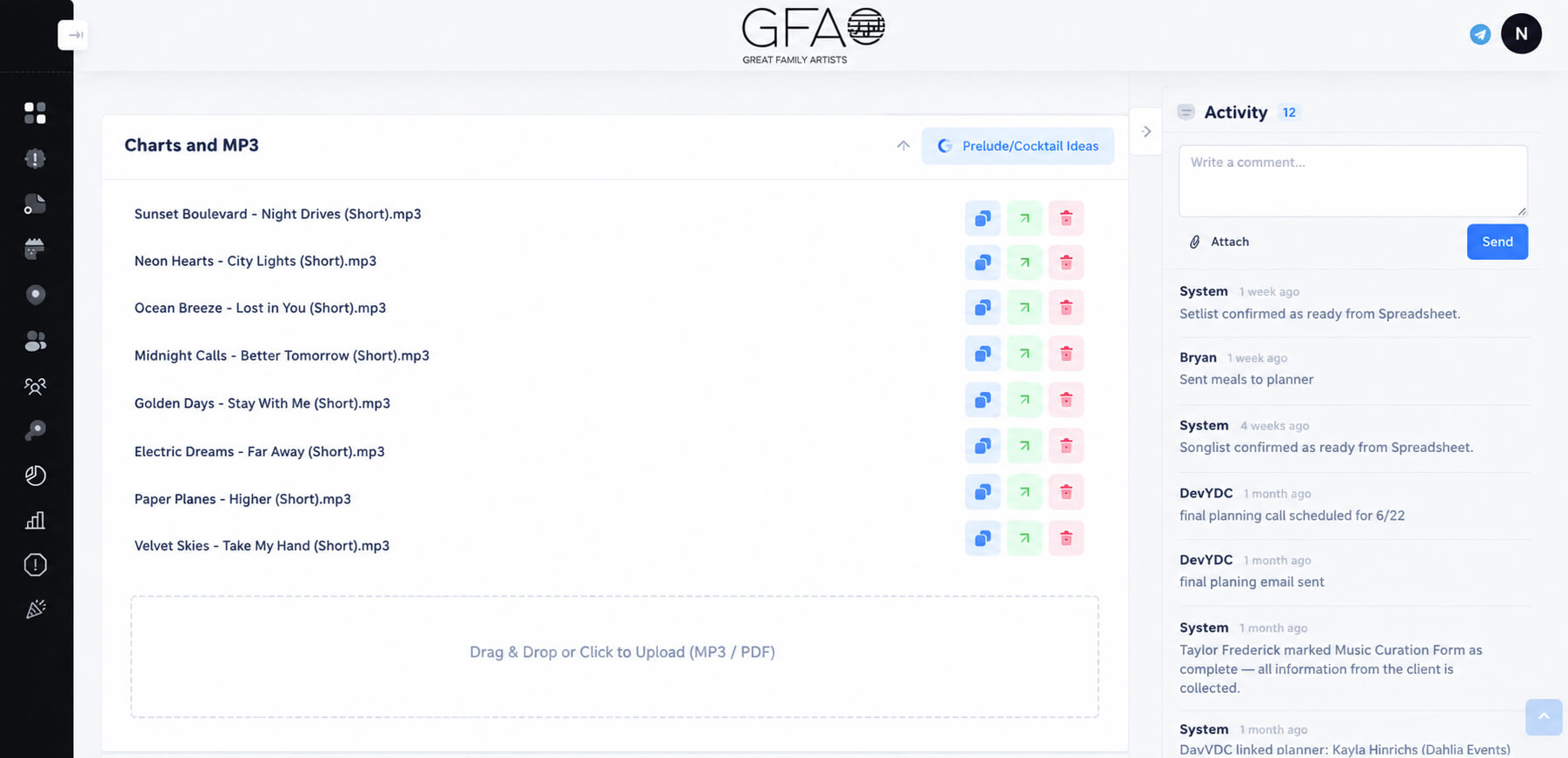
Client music preferences flow into a structured planning process where Music Directors can manage special moments such as ceremonies, cocktails, and first dances, organize songs, attach audio references, and associate sheet music with different instruments. Information remains connected across client input, ERP workflows, and the working setlist as the event evolves.

Automated Performance Packages

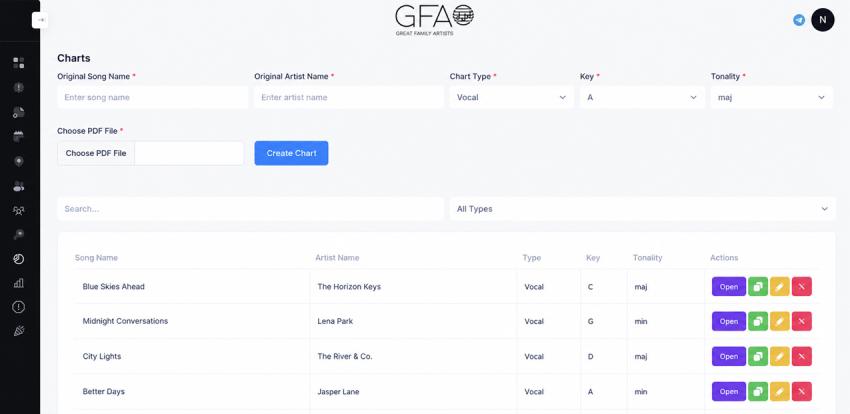
Once the music program is finalized, the system can transform the working setlist into performance-ready materials. It generates an updated PDF, distributes it through event communication channels, attaches relevant materials to the calendar, and prepares instrument-specific sheet music packages so each musician receives the materials required for the performance.

SMOOTH DELIVERY

Great Family Artists showcases the gradual evolution of software with the business. We began by enhancing the existing Trello-based workflow with automations for contracts, events, documents, calendars, and communication.
After reaching the limits of tool-based automation, we introduced a server-side architecture that connected existing services, laying the foundation for a future ERP. This architecture later evolved into a custom ERP while maintaining integrations with Google Workspace, OneFlow, Twilio, and other services.
The resulting platform centralized operations and streamlined the entire event lifecycle, including contracts, event planning, musician hiring, calendar synchronization, client preferences, setlists, sheet music, and performance management.

HAPPY CLIENT

“

YeduCoders didn’t simply build software around our existing processes – they helped us rethink how our entire operation could work.
What started as automating individual tasks across Trello and Google tools gradually evolved into a centralized ERP that connects our events, clients, musicians, contracts, schedules, and music planning. The platform gives our team much greater visibility and control while automating an enormous amount of coordination that previously depended on manual work.”

Jordan Linit

CEO